Jackbit Crypto Payments: coins, networks and withdrawal practicalities
 Available in GB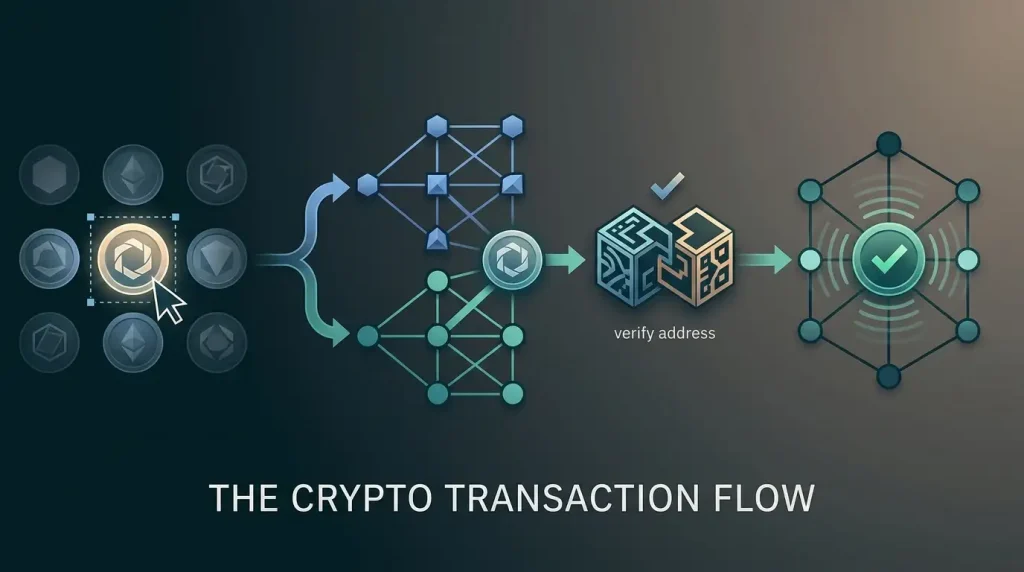
Table of Contents
- What matters most with Jack crypto payments
- The current Jack wallet is built around crypto
- A supported coin does not imply every network is supported
- The coin list and the available networks
- Deposits need three matching pieces
- Withdrawals repeat the same network problem in reverse
- Crypto does not remove KYC
- For UK readers, think in pounds before and after the crypto step
- Coins, chains and transaction destinations
- Tokens with similar names are not interchangeable
- Address, memo and destination details
- Understanding the complete cost in pounds
- When the transfer does not appear
- When crypto is the practical payment route at Jack
Section element
Crypto is the clearest confirmed payment rail on the current Jack.com platform. The current wallet and withdrawal material shows support for a broad multi-coin set including Bitcoin, Ethereum, Tether, Solana, XRP, Litecoin, BNB, Bitcoin Cash, Dash, Monero, USD Coin, DAI, Dogecoin, Shiba Inu, TRON, Polygon and Chainlink. The important practical point is that coin support and network support are not the same thing.
Before sending money, check the exact asset, blockchain network and deposit address shown in the live cashier. Before withdrawing, repeat the same network check for the receiving wallet. Crypto also does not remove the possibility of identity verification: Jack can request KYC when its risk-based controls trigger a review.
The current Jack wallet is built around crypto
Jackbit completed its transition to Jack.com on 29 May 2026, but older Jackbit searches still lead users into the same payment questions. Current Jack material describes a crypto-based wallet and a set of 17 supported cryptocurrencies. That makes crypto more than an optional niche method: it is the main confirmed rail for moving value into and out of the present platform.
The Jackbit Payment Methods for UK Readers guide explains how a buy-crypto service can sit between pounds and the casino wallet. Once crypto reaches the wallet, the main issues become asset choice, network choice and address accuracy.
For the wider context around the crypto wallet and other Jack products, read complete Jackbit casino review.
A supported coin does not imply every network is supported
Many payment mistakes happen because users focus on the ticker and ignore the chain. USDT can exist on more than one blockchain. The same is true for other tokens that have been issued or bridged across multiple networks. If Jack shows one network and the sending wallet uses another, the asset name can look correct while the route is still wrong.
The current Jack withdrawal guide explicitly separates coin selection from network selection and notes that stablecoins can involve different chains. The rule for deposits is simple: use the network displayed for that deposit address. The rule for withdrawals is the mirror image: choose a network that the receiving wallet supports for the same asset.
Match the cashier and the receiving wallet
Do not save an old deposit address or assume that a network available last month is still the correct route. Open the cashier again, select the asset, confirm the network and copy the address from the current screen.
The coin list and the available networks
Jack’s current public withdrawal material lists 17 cryptocurrencies: BTC, ETH, SOL, XRP, LTC, BNB, BCH, DASH, XMR, USDT, USDC, DAI, DOGE, SHIB, TRX, POL and LINK. That range shows the variety of cryptocurrency options, but it should not be treated as a permanent promise that every asset will always be enabled for both deposits and withdrawals.
Assets can be paused, renamed or migrated, and a wallet can support different networks for different functions. For that reason, the practical check is not merely “Does Jack support this coin?” but “Does the live cashier currently show this coin on the network I intend to use for this transaction?”
Deposits need three matching pieces
| Piece | What must match | Typical mistake |
|---|---|---|
| Asset | The coin or token selected in Jack | Sending a different token with a similar name |
| Network | The chain specified by the Jack deposit screen | Choosing an unsupported chain because the ticker is the same |
| Address | The current deposit address shown for that asset/network | Reusing a stale or incorrectly copied address |
After sending, the transaction also needs the required blockchain confirmations before the balance can be treated as settled. That confirmation period belongs to the network rather than to a bank or card processor, so congestion and block production can matter.
Withdrawals repeat the same network problem in reverse
When cashing out, the receiving wallet becomes the destination rather than Jack. Select the crypto asset in the withdrawal screen, choose the supported network, and make sure the external wallet can receive that exact combination. The dedicated Jackbit Withdrawals guide covers operator processing, limits and payout timing separately.
Do not assume crypto guarantees a faster payout. Jack’s internal processing is only one part of the journey, and blockchain confirmation can take a different amount of time depending on the network. A network chosen for convenience or lower cost may also behave differently under congestion.
Crypto does not remove KYC
Jack can request identity verification under its risk-based KYC model. That means a user can encounter a document request even though the deposit and withdrawal rails are cryptocurrency-based. The fact that a blockchain address is pseudonymous does not make the casino account permanently anonymous.
The separate Jackbit KYC page explains when verification can become relevant and which details need a current policy check. For crypto payments, the practical takeaway is simply to avoid choosing Jack on the assumption that using Bitcoin or a stablecoin guarantees no identity review.
For UK readers, think in pounds before and after the crypto step
A UK user can still judge affordability in GBP even when the casino transaction itself uses crypto. If pounds are converted into crypto before deposit, the effective cost can include the exchange rate or spread applied by the on-ramp plus any network cost. If winnings are later converted back to pounds, there is another conversion step outside the casino.
That makes the number of steps part of payment convenience. Someone already holding the supported asset in a compatible wallet has a shorter route than someone who must buy crypto before depositing and convert it again after withdrawal. The Jack licence and operator details page is separate because regulatory status does not change the mechanics of selecting a coin and network.
Coins, chains and transaction destinations
The current Jack cryptocurrency list contains 17 assets, including POL. A supported asset still needs a network that matches the transfer destination. The selected coin, chain and receiving address together identify the route; a ticker on its own does not.
Tokens with similar names are not interchangeable
A token ticker is only one part of a transfer instruction. A receiving service might support a token on one chain but not a bridged version elsewhere. That is why the cashier’s selected network needs to match the sending wallet and why an address should never be copied from a different asset tab. A familiar name does not make all representations of that asset equivalent.
When a cryptocurrency changes ticker or migrates to a different representation, old articles and saved wallet labels can lag behind. POL and MATIC are an example of why historical asset names need care. The current 17-asset list names POL; it does not justify treating MATIC as an additional separately supported asset, or adding BUSD without its presence in the current payment screen.
Address, memo and destination details
An address is the essential destination, but some networks or receiving services also use an additional tag or memo. If the actual receiving instructions show such a field, make sure it accompanies the correct address. Never invent a memo to match an example in a different wallet, and never leave a required one blank because an old guide does not mention it.
The same care applies when withdrawing to an exchange deposit account rather than a wallet you directly control. The exchange chooses which networks and additional identifiers it accepts. A token appearing in an exchange account does not establish that all chains carrying that token are valid deposit routes.
Understanding the complete cost in pounds
A player starting with GBP might encounter one conversion when acquiring a coin, a network transfer when sending it, and another conversion after receiving a withdrawal. These are different steps with potentially different displayed amounts. The coin balance inside the casino is not necessarily equal to a guaranteed sterling amount at the time it is converted later.
It is useful to separate a fee explicitly shown by a service from an exchange-rate spread and from a blockchain network charge. Without seeing the particular route and the amounts shown at the moment of the transaction, a single all-in fee or sterling equivalent would be misleading.
When the transfer does not appear
Begin with the transaction identifier in the sending wallet, where one is available. Compare its asset, chain and destination with the cashier information. A transaction that has not been broadcast, one that is awaiting chain confirmations and one sent to an incompatible destination are not the same problem.
If the destination and network match but the casino balance has not updated, use the transaction details when contacting official support. Avoid posting the complete account record or private wallet material in public. Blockchain transaction identifiers can help describe a transfer; wallet seed phrases and private keys are never needed for that purpose.
When crypto is the practical payment route at Jack
Jack’s current payment model makes the most sense for users who understand how to match an asset, network and wallet address before moving funds. The platform supports a broad set of coins, but the live cashier still matters because support for a coin does not guarantee every network or transaction direction. UK users who begin and end in pounds should also account for the extra conversion steps around the casino wallet. Crypto can simplify the payment rail, but it does not remove KYC, network risk or the need to verify the exact route before sending.